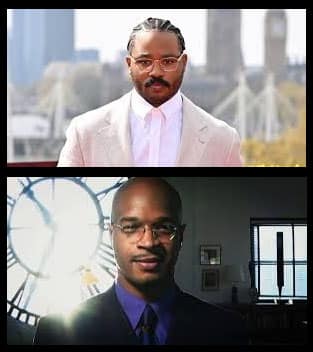
We appreciate anyone who speaks to us about authenticity in art. However, when someone defends the use of racial slurs in media under the guise of an “authentic experience”, we have to ask a very serious question, To whom is this experience authentic? We have to be very careful not to excuse distortion for normalcy. We ask, Why does anyone find it normal to address another with a racial slur? We also ask, Why is the racial slur falsely associated with the African Diaspora heard and spoken most commonly in media? Additionally, we ask, Why are the masses becoming so comfortable with hearing this slur that they will defend its use under the guise of “authenticity”?
Nuances of Reality
We received feedback from a thinker who made a good point about nuances of reality. The thinker’s opening question was, “When an artist is conveying an authentic experience, why should [the artist] edit out the nuances of reality?” This was in regards to the Ryan Coogler movie, “Sinners”. We appreciate this comment about reality. However, this begs the question, Isn’t it also reality that there are siblings (like the Smoke-Stack twins) of the African Diaspora who do not refer to one another with the racial slur assigned to their ancestors by slave traders?
Even in Mississippi in the 1930s, during the time and place of the movie, “Sinners”, isn’t it reality that there were men and women of the African Diaspora who respected one another both in deed as well as in word? Yes, it is reality. The question then becomes, Why is it that Ryan Coogler regularly chooses the nuance of reality that popularizes a racial slur–specifically by his protagonist?
The same thinker made an additional point that, “Everything isn’t for everybody.” and that, “[“Sinners”] is rated R for that reason.” To this rating point, we agree; the movie is rated R (R for Restricted). This restricted rating however does not remove Ryan Coogler from his personal responsibility. His work is presented to the public for profit and the public is speaking.
What is Happening Around Us
Now that we’ve addressed the thinker’s feedback, let’s take a careful look at what is happening around us. A racial slur is becoming synonymous with a pronoun. This is not acceptable. We see this in “Sinners”. We also see this in the “Creed” movies. Now think about the songs that are considered popular—the ones that receive the bulk of radio play and marketing—the ones that are celebrated in music award shows. On average, these songs give voice to a racial slur three times per minute. People are being rhythmically desensitized into accepting a cultural insult. Too many people excuse this.
However, we should reject the practice or excusing any cultural infractions—especially in the name of “art”. If we choose to allow racial epithets to become normal, everyone will be adversely affected. If we simply watch this happen, one day it will become too prevalent to ignore. One day soon, you may see commercials on television or online for food or clothing where people of the African Diaspora are being permanently identified by a racial slur. This is not acceptable.
Popular Culture–Again
To further illustrate this concept, we ask that you please watch a 2000 movie named, “Bamboozled”, written and directed by Spike Lee. In this film, a minstrel show is introduced to a major television network. At the minstrel show’s live screening, there is an initial level of discomfort by most of the audience. However, with a little time, and some crafty marketing, the minstrel show begins to soar in ratings. It becomes heavily marketed. By the middle of the movie, there are huge advertisements for The New Millennium Minstrel Show everywhere, including Time Square, public buses and even in commercials for children. The ad includes a racial epithet wearing blackface. In the movie, blackface becomes a part of the popular culture—again. This is all allowed to happen by the general public. No one speaks up in time.
Once you watch or re-watch this film, you may say, “There’s no way that could happen.” To that, we say, “The process has already begun. Let’s prevent it.”
That’s what ithinkie.
Let us know what you think.
Published: May 20, 2025