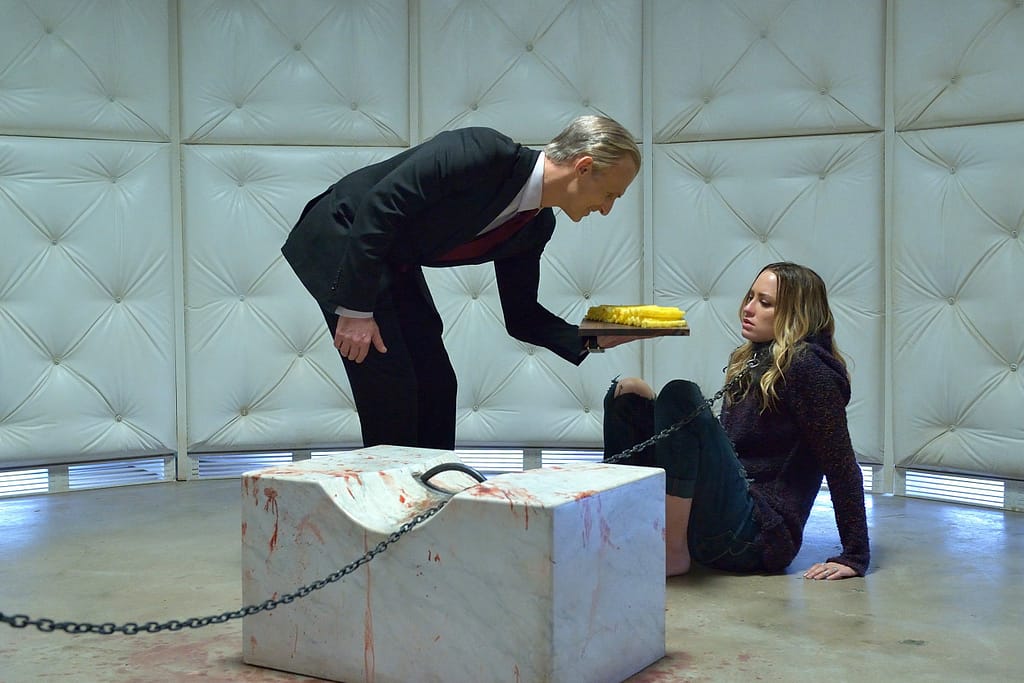
The scenes with Dutch in The Strain, Season 2, Episode 11, are absolutely harrowing. They’re not just moments of physical danger—they’re a prolonged psychological assault that echoes real-life trauma: the terror of being overpowered, objectified, and stripped of agency. That kind of violation—whether it’s unwanted touching, grabbing, or any other form of assault—is real. And its impact is lasting.
This is Brutal.
This episode is especially brutal, even traumatic to watch, because it mirrors the mechanisms of abuse that exist in our world (with humans)-control, isolation, humiliation, and violence, not for survival, but for gratification and dominance. In those moments, it’s not about vampirism—it’s about power and control and there are human men who do the exact same thing everyday on every scale and it’s devastating.
Before he Changed?
Eichhorst is a perfect embodiment of this dynamic. Before he was a vampire, he was a man who felt insignificant—a failed salesman searching for something to give him the illusion of power and worth. That’s why he became a Nazi. That’s why he clung so desperately to the Master’s “gift”. Eichorst’s transformation into a vampire didn’t cure his emptiness; it just gave him new tools to express it. His violence, cruelty, and obsession with domination were never about hunger—they were about control, born from a deep and festering sense of inadequacy and just being a quintessential loser. Like so many abusers in the real world, he couldn’t feel value in himself unless he was stripping it from someone else.
Equally moving, if not more so, was Dutch’s resistance. Even in absolute terror, she fought. When escape seemed impossible, she kept going. Through pain, trauma, and fear—with no weapons and only half her clothes—she never gave up. Her resilience, her sheer will to survive, was her power. The rescue couldn’t have come if she hadn’t saved herself.
Support not Saviorhood
Fett’s arrival at the end symbolizes something important—not saviorhood, but support, the kind of support that, when we’re lucky, is available to real survivors of violence and abuse. However, the show is careful not to turn Dutch into another damsel in distress. Instead, Dutch has full autonomy in her own escape. That distinction matters.
My tears and rage are evoked by this episode because I see the horror for what it is, on each of its levels, and I will never accept it as normal or okay, no matter how common it seems to be. If you are reading this, please remember, your boundaries matter, your voice matters, and your fight—past, present, and future—matters.
Tucked inside a show about vampires and supernatural threats, this episode stood out not because of the fantasy in a well-told story, but because it laid bare a very real truth: violence like this exists and it is unacceptable.
That’s what ithinkie.
Let us know what you think.
“It’s important that we choose love over fear, because love is the answer.” -Guillermo del Toro
Published: August 1, 2025